From Overwhelmed to Operator: The Role Shift That Moves a High-Conflict Case
Overwhelm in a high-conflict custody case is a role problem, not a feelings problem. Here is the shift from survivor to operator — named in the parts that actually move.
The reason you feel overwhelmed isn’t that you aren’t trying hard enough. It’s that you’re trying hard at the wrong job.
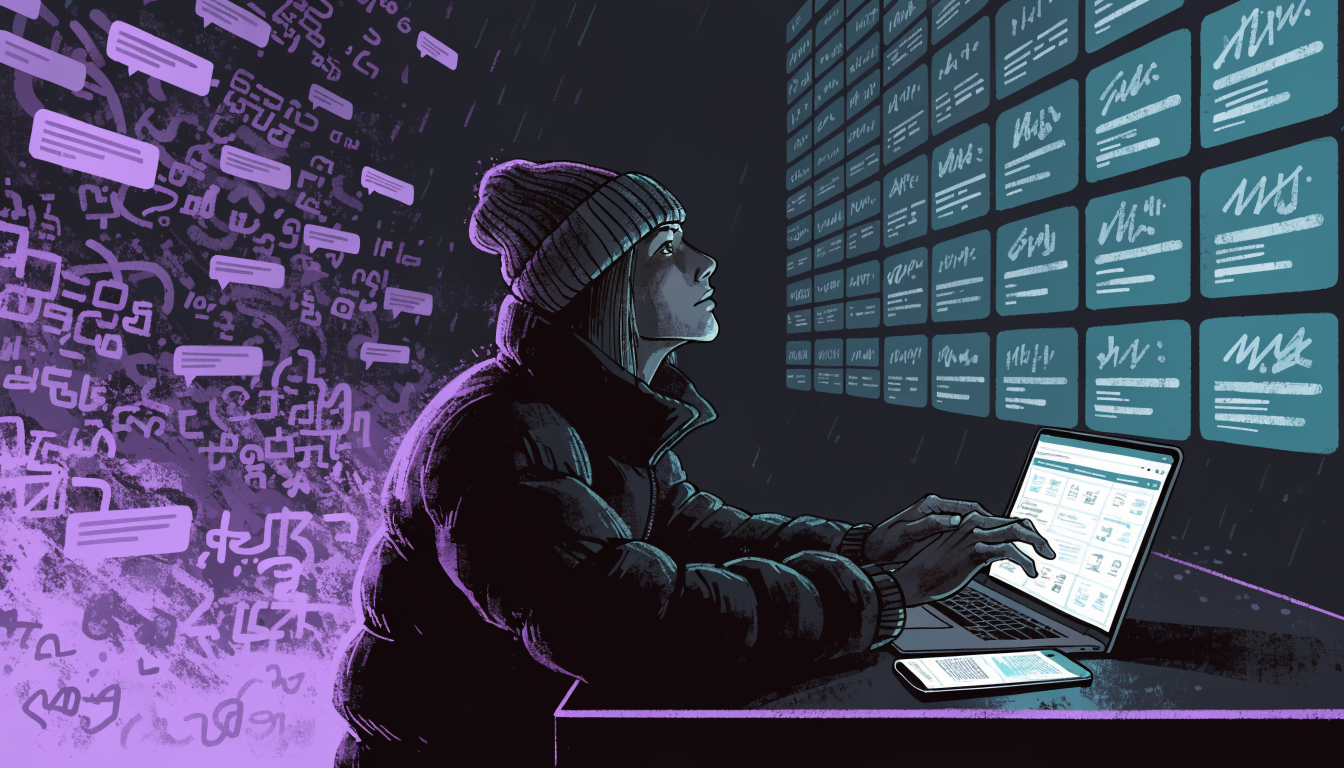
For months, possibly years, you’ve been the survivor of this case. You’re the one things keep happening to. The late pickup, the rewritten history, the message at 11:47pm that ruins a Tuesday. The case is the weather. You’re the person standing in it without a coat.
Operators don’t stand in the weather. They run the building. The shift from one role to the other is small, undramatic, and it changes what a Tuesday at 11:47pm is allowed to do to you. The rest of this post is that shift, named in the parts that actually move.
Why overwhelm is a role problem, not a feelings problem
Overwhelm in a high-conflict custody case is usually a role mismatch, not a moral failure. It’s the predictable result of trying to handle an organized adversarial process from inside the role of the person it’s happening to.
This is hard. That sentence is true and the post will not repeat it. The wellness-style version of this post would expand the difficulty across five paragraphs and call the expansion empathy. That isn’t empathy in a high-conflict situation; it’s stalling. The expansion eats time you don’t have and leaves you in the same role you started in.
The literature on sustained stress generally finds a pattern most parents in this situation will recognize. The brain treats persistent uncertainty as a threat, which means cognition, memory, and decision-making all get harder under exactly the conditions where they matter most (Goosens & Sapolsky 2007; Yaribeygi et al. 2017). The result is the feeling that the case is weather: continuous, indifferent, something you absorb rather than something you act on.
The role shift is where the case actually moves. The post isn’t telling you to feel different about the messages or the missed exchanges. It’s telling you that occupying a different role makes different actions available, and those actions are the ones that move the case.
What the operator actually does (and what the survivor was doing)
The operator decides. The survivor absorbs. That sentence is the post in seven words; the rest is the operational detail underneath it.
A worked example. It’s a Tuesday at 11:47pm. M (8) is asleep down the hall. A message arrives from J: long, full of accusations, with one logistical question buried in paragraph three. The survivor reads it and feels what it makes them feel: the chest-tight, the spinning, the urge to reply now and set the record straight. By 12:30am the survivor has typed and deleted three responses and is staring at the ceiling.
The operator reads the same message and sorts. The accusations go in one column (provocation; respond never, log the entry). The logistical question goes in another (logistics; respond tomorrow morning, brief and factual, copy the answer into the record). The 11:47pm timing goes into a third (pattern; this is the seventh after-10pm message in 23 days, the running tally lives in the workbook). The operator closes the phone and is asleep by 12:05am. The record gets built tomorrow.
Same message. Two different shapes. The survivor’s response and the operator’s response will both end up in the record the other parent’s attorney eventually reads. The record reads very differently depending on which one wrote it.
A few other shifts worth naming, drawn from the same example. The survivor explains themselves when accused; the operator notes the accusation in the record and lets the record do the explaining. The survivor’s calendar is built around what the co-parent did this week; the operator’s calendar is built around the case’s documented arc and the deliverables the next quarter requires. The survivor improvises. The operator runs a process.
The operator’s case map: six things you decide instead of feel
The operator carries a small map and runs the next message through it. The survivor improvises and exhausts themselves. The map is six decisions, none of them complicated, all of them substituting for the feelings that used to drive the response.
- The lens. Is this child-safety, logistics, or provocation? Most incoming messages sort cleanly into one bucket within thirty seconds. The first two buckets get responses. The third bucket gets logged, not answered.
- The window. Does this require a response in the next 24 hours, the next week, or never? A logistical question about Saturday’s exchange is a today response. A request to “talk about something important when you have time” is rarely a today response.
- The record. What does the contemporaneous log say about this incident type? Is this a singleton or the seventeenth instance of the same pattern? The answer changes whether this lands in the daily log or the pattern-tracker.
- The audience. Who would eventually read this thread: the Guardian ad Litem, the custody evaluator, the judge? The operator writes for that reader, even when only the co-parent is reading today.
- The cost. What does engaging this cost in time and in the attention available for M? The survivor pays the cost without noticing. The operator notices and decides whether the cost is worth the action.
- The next deliberate move. Which of three actions does this get: log only, BIFF response (Brief, Informative, Friendly, Firm), or escalation through counsel? BIFF is a communication framework developed by family law attorney Bill Eddy at the High Conflict Institute. Three actions. No fourth bucket called “let me think about it for the next nine hours.”
You don’t need to feel calm to run the map. You need to run the map. The calm is downstream.
The handoff: where the operator stops and the professionals start
The operator runs the case. The professionals run the parts the operator hands off. Knowing which is which is what keeps the operator role from becoming a different way to drown.
The operator’s actual scope is narrower than parents often think. Keep the contemporaneous record. Set the communication discipline: brief, factual, written, BIFF-aligned where engagement is required. Prepare the documentation packets the attorney and the GAL will eventually read. Make the moves you’re authorized to make under the parenting plan that exists today.
What the operator does not do is litigate themselves into a corner. Diagnose the co-parent. Perform their own custody evaluation. Those are professional roles run by people with the licensure and the experience to run them, and the operator’s job is to build the inputs those professionals need.
In many jurisdictions, the legal scaffolding looks roughly like this. The attorney runs the legal strategy: which motions, when, on what record, with what expected outcomes. The therapist (or the child’s therapist) runs the work on what the case is doing to the parent and, separately, what the case is doing to the child. The parenting coordinator, where one has been assigned, runs the structured dispute-resolution process between the parents. The Guardian ad Litem or the custody evaluator, where appointed, runs the assessment. Parenting coordinator and GAL availability varies sharply by state; some jurisdictions appoint them routinely in high-conflict cases, others rarely or not at all. Your attorney can advise on which of these roles applies in your jurisdiction and to your case.
The operator builds the inputs and then gets out of their way. A clean handoff to a professional is faster, cheaper, and more useful than an operator who has spent six weeks trying to run a role they aren’t authorized to run.
The operator is a role, not an identity
The operator is a role you occupy during case-facing work. It is not an identity, a personality replacement, or a permanent state. That distinction is what makes the role sustainable.
The fear most parents have when they hear “operator mindset” is that they’re being asked to be cold, robotic, a strategist version of themselves who doesn’t laugh at breakfast and doesn’t feel the small joys M brings home from school. That isn’t the assignment. The operator is the version of you that handles the message, writes the log, prepares the GAL packet, and shows up to the meeting. Two hours total on a normal week, sometimes less.
The rest of your life runs in your normal register. The morning with M. The friendship that still exists. The small good thing that returns when you stop drowning. The role is contained. It’s time-boxed. The better-executed it is, the less it bleeds into the parts of your life that don’t belong to the case.
Contemporaneous documentation is part of what makes the containment possible. When the incident is logged within a few minutes (the date, the time, the verbatim words, the child’s response), the entry holds the memory so your mind doesn’t have to. The cognitive load that used to follow you to bed gets externalized into a record that sits on a server overnight and is still there in the morning, exactly as you left it. The literature on sustained stress and allostatic load describes this kind of externalization as one of the practical responses available to a person operating under chronic demand (McEwen 1998); the operator’s record is the operational form of it.
If this section is bringing up bigger feelings, that’s a signal worth listening to. A therapist who works with high-conflict separation is a different resource from a friend who means well, and the difference matters when the work is multi-year.
How Verascribe Guardian holds the operator’s record
Verascribe is built for the operator role, not the survivor role. The structure of the app is the structure of the record an organized parent actually keeps.
When you log an incident, you pick the category first: communication, schedule, health, significant event. Only the fields relevant to that category appear. There are no abstract free-text boxes that drift into adjectives and labels. The verbatim-quote field captures what was said. The child-response field captures what M did or said in plain language. Date and time are auto-captured at the moment of entry. The shape of the log makes it harder to write a survivor entry and easier to write an operator one.
Every entry is part of a cryptographically verified chain. When the other parent’s attorney suggests your records were written last weekend in preparation for the hearing, the chain timestamps answer them, without you having to make the argument yourself.
Here’s the part most custody documentation tools don’t tell you. Most other apps in the category store your records on their own servers. That means a company you’ve never met holds your most sensitive family records and can be compelled to produce them on terms you didn’t control. Verascribe works differently. Your records live in your own Google account, in your own Google Drive. Your data. Your ownership. We never hold your records. A subpoena directed at us doesn’t reach your records because we don’t hold them. Any demand goes through you, not through a company you’ve never met.
What you do this week now that you have the role
Recognition is the first move. Three small operator actions are the second. None of them require the co-parent’s permission.
First, name the role privately. Write “operator” somewhere you’ll see it: inside the cover of your case binder, on the workbook header, in the notes app you open at the kitchen table. The next time a message arrives at 11:47pm, the role activates before the feeling does. The cue is small. The compounding is real.
Second, triage the next message you receive. One message. Not the whole inbox. Sort it into one of the three buckets (child-safety, logistics, provocation) and act on the bucket, not the feeling. The operator builds the habit on one decision at a time, and the next message is the next decision.
Third, protect the rest of your life. The operator role does the case-facing work. The rest of you lives the Tuesday morning that comes after the Tuesday night. That separation isn’t avoidance; it’s what makes a multi-year case survivable.
You don’t have to feel like an operator to be one. You just have to do the operator’s next move.